Start with what is known
Record who is attending, what the inquiry concerns and which documents are already available. Link to the particular file or message. A summary such as “website project” is too vague when the discussion actually concerns only the contact page.
Distinguish information from an earlier message from your own assumptions. A client mentioning faster inquiry handling is a statement. Deciding that a new form is required is, at this stage, only one possible solution.
Choose three questions instead of twenty details
Select questions whose answers change what happens next. For a contact page, these could be: What inquiries arrive? Which information is regularly missing? Who replies? The exact color of a button probably matters less at this point.
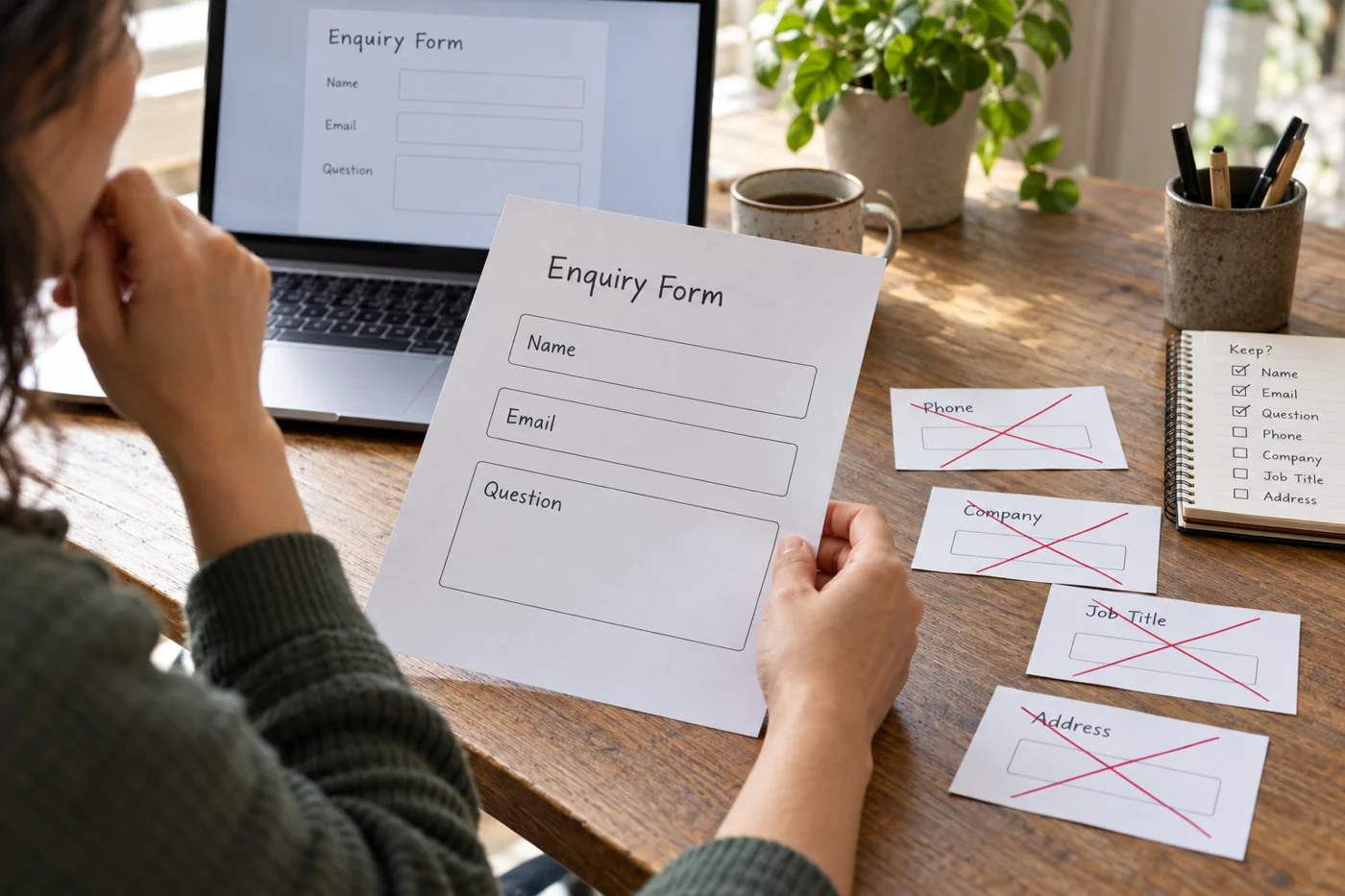
Use open wording without embedding the answer you want. “Which information is missing?” leaves more room than “Do you need a mandatory phone number field?”. The latter already suggests a solution before the problem has been sufficiently described.
Name the intended result of the conversation
Write down what should be clearer afterwards. It could be a decision about the next investigation rather than a finished project plan. A realistic outcome helps keep the conversation within its allotted time and makes it easier to park new subjects for later.
Send only the parts of the brief that are useful to the other person. Internal capacity notes or unconfirmed assumptions do not belong in a client email without review. Keep the shared version distinguishable from internal notes.
After the conversation, add decisions and correct mistaken assumptions. The brief then becomes a starting point for the next tasks. Avoid keeping several ambiguously named copies; identify the version discussed and connect it to the accompanying conversation record.