Break the transition into tasks
Write down what really happens between two conversations. After a short video appointment, saving notes, taking a water break and opening the next brief may be enough. An in-person appointment might also involve clearing a room, changing materials or travelling. Keep conversation time separate from these activities.
Different appointment types do not need identical buffers. An initial discussion with an uncertain scope may require more follow-up than a structured status call. Start with an explainable assumption and check it against several real transitions.
Check the booking system
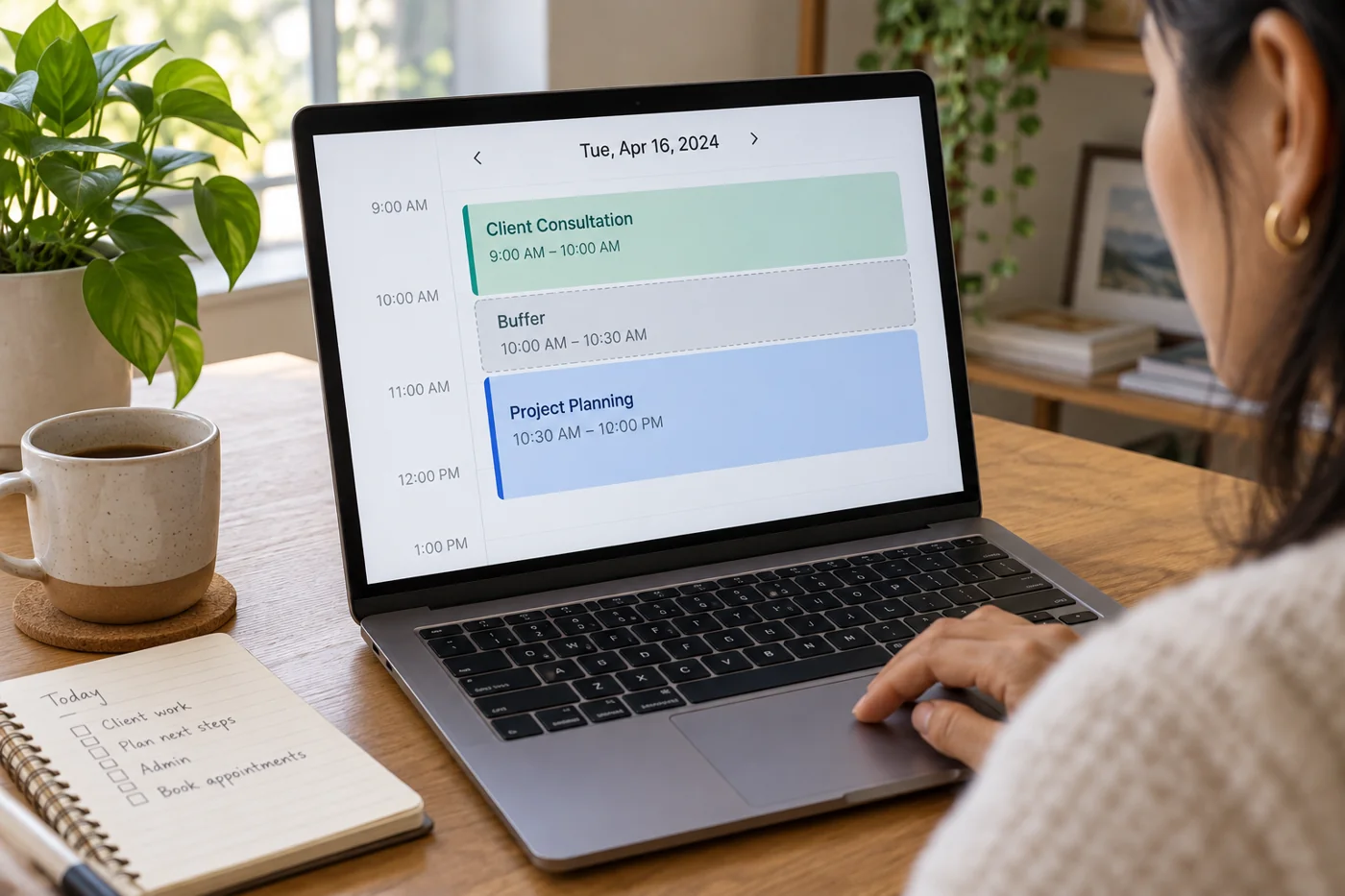
Some appointment tools explicitly offer buffers between bookings; Google Calendar documents this for appointment schedules. Check which settings are actually available in your product and account. Do not confuse buffer time with minimum booking notice: one separates appointments, while the other limits last-minute bookings.
Test the public booking view with two consecutive appointments. The times offered to visitors must be correct, not just your own calendar display. Also check whether a different appointment type or second booking calendar can still offer the protected gap.
Calculate one working morning
Suppose you want to hold conversations between nine and twelve. Each conversation lasts forty minutes, followed by twenty minutes for notes and preparation. Three such blocks already fill the three hours. Four appointments do not fit merely because their combined conversation time is less than three hours.
Consider the period before the first appointment and after the last one. A system may treat buffers differently from the arrangement you have in mind. Reserve necessary edge periods explicitly where needed, then inspect the start times actually offered for booking.
Adjust after a week
Compare a few planned transitions with what actually happened. If conversations consistently finish late, clarify their scope, change their duration or leave more separation. A larger buffer does not resolve an unclear service description, but it can reveal a real demand on working time.
Avoid changing duration, buffer and daily appointment count simultaneously if you want to understand an adjustment. Record what changed and for which appointment type. Already confirmed appointments need separate consideration; a new setting does not replace communication about existing commitments.