Connect waiting to a next step
Record which answer is missing and why it matters. “Reply about proposal” remains vague. “Check whether the requested start week has been confirmed” describes a specific action. Link the relevant message or retain a unique reference.
Choose timing that suits the matter. A response promised for Friday needs different handling from a noncommittal general inquiry. The date should follow the agreement and working needs rather than an identical automatic delay for every case.
Check the current state before following up
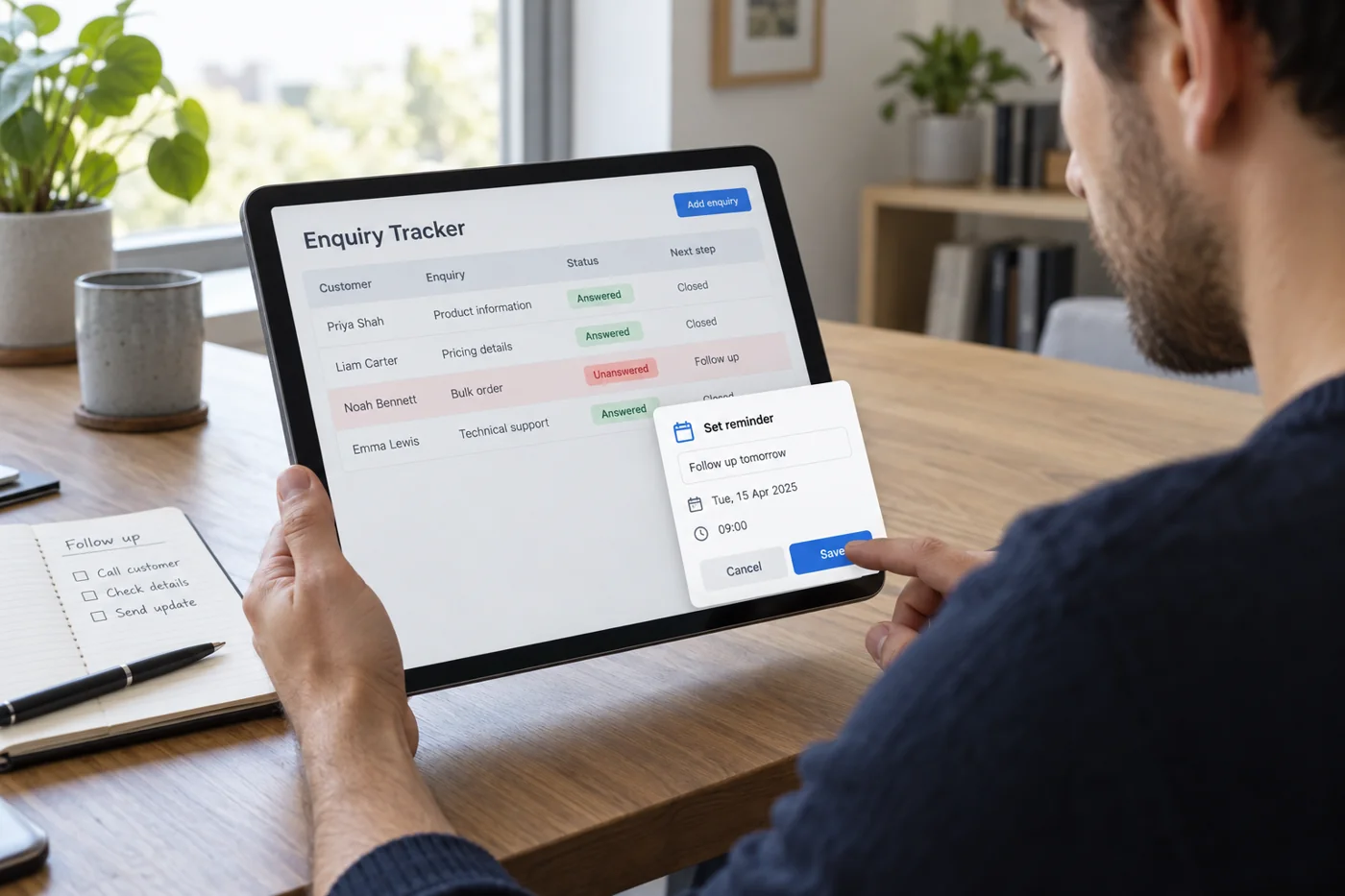
When the reminder becomes due, open the matter first. An answer may have arrived through another channel, or a colleague may already have called. A reminder is not an instruction to resend the same message without checking.
If a follow-up is useful, identify the earlier conversation and remaining question. Avoid an accusatory tone. A concise message can explain that a decision is needed for planning and offer a straightforward way to answer.
Avoid postponing forever
Decide what happens if another response does not arrive. The inquiry could be paused, closed internally or reviewed at a later point. The choice depends on the context. Moving a reminder forward one day repeatedly does not create clarity.
When an answer arrives, close or revise the reminder alongside the inquiry. Otherwise a completed matter generates unnecessary questions later. Give a new task its own next action instead of changing the old reminder until its original meaning is lost.
Occasionally review the waiting list. If an entry lacks a specific question or an owner, add them. A good reminder lets you act at the right moment without reading the entire history again.