Establish the connection before the conversation
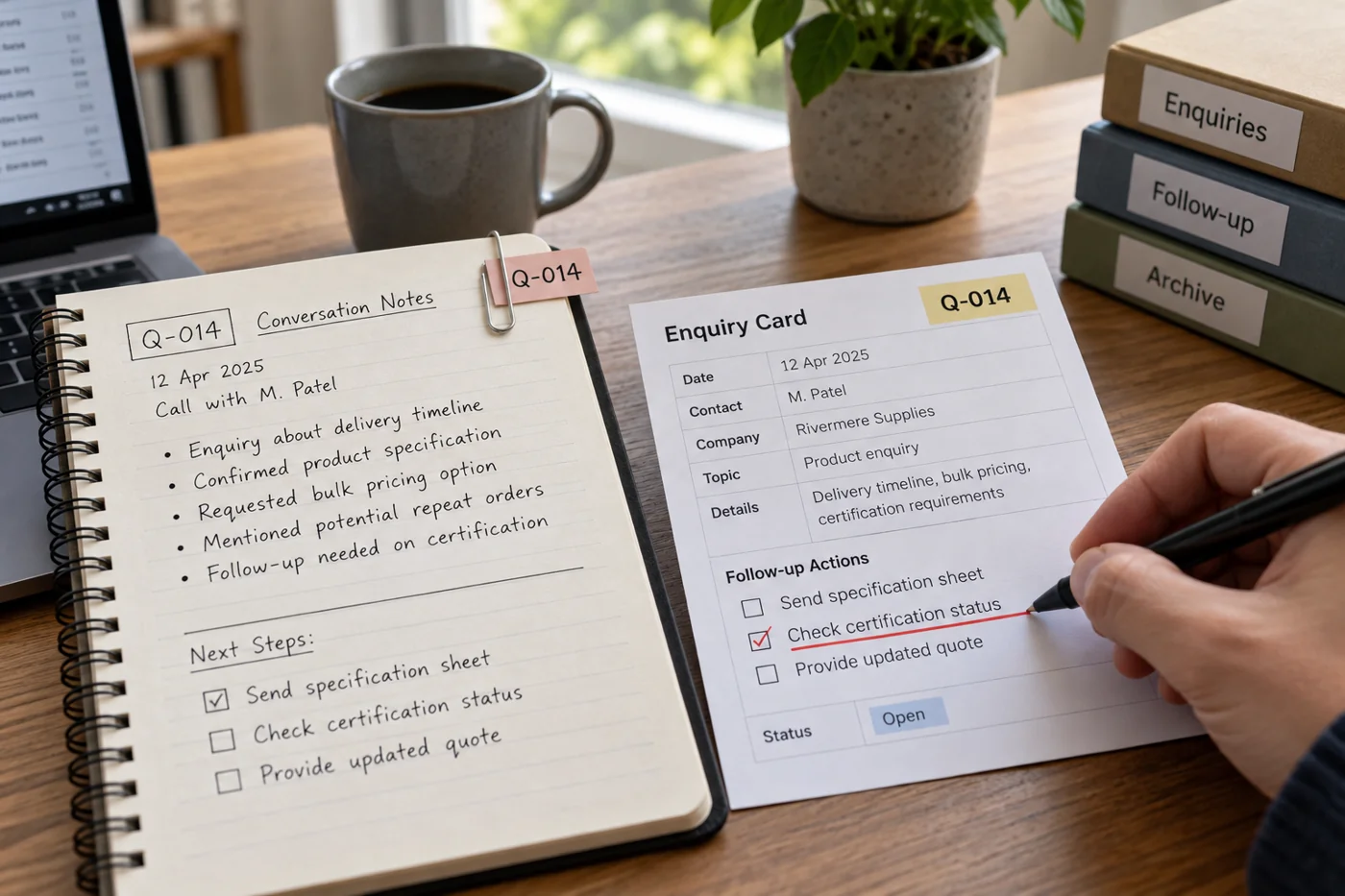
Open the existing inquiry or create a unique reference. Record the date, participants and subject discussed. When several matters concern the same organization, its name alone is not enough. The note should point to the correct engagement or outstanding question.
Link relevant documents rather than copying their entire contents. This preserves which version was discussed. If new information contradicts an earlier message, mark the change instead of leaving both statements side by side without explanation.
Separate statements, decisions and actions
“The current website is rarely updated” is information. “We will examine the editorial workflow first” is a decision. “Ms Keller will send the current page list by Friday” is an action. These three kinds of note require different follow-up.
Write factually and only as extensively as the matter requires. Personal judgements about participants do not help the next person handling the inquiry. Leave unclear information marked as a question rather than replacing it with your own assumption.
Review promptly and share selectively
Read the notes again immediately after the conversation. Expand unclear abbreviations and check that every agreed next step has an owner. Something you can fill in from memory today may be impossible to reconstruct next week.
Share a summary with participants when shared actions result. Internal working notes and the external summary do not need to be identical. Identify which version was shared.
At the next contact, start with the outstanding points instead of searching through all previous messages again. When the matter closes, close the associated reminder too. A collection of notes stays manageable when it remains connected to the actual state of the work.