Describe availability realistically
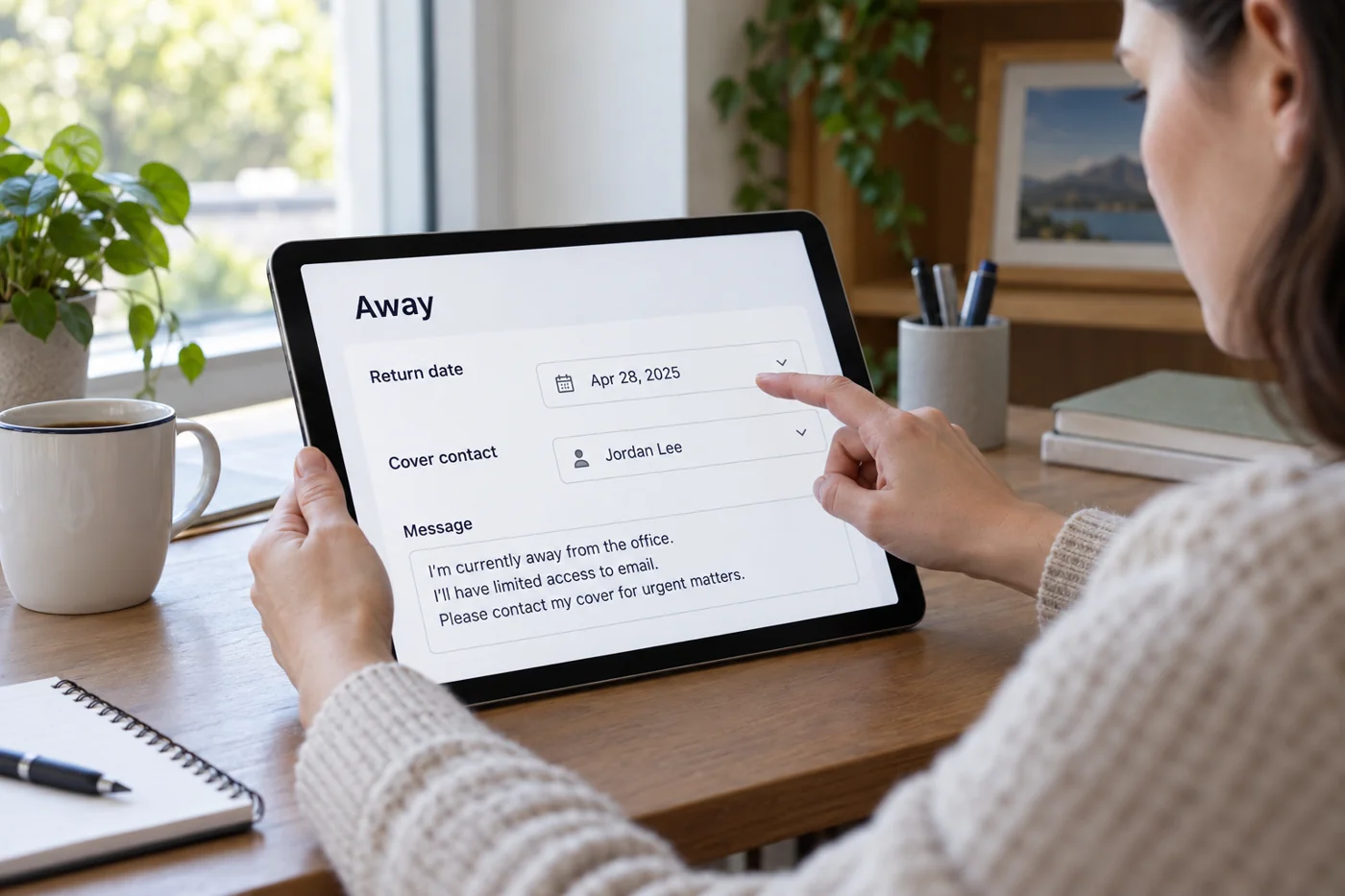
Give an unambiguous return date or period. “Next week” can become confusing when read later. Do not promise handling during your absence if nobody monitors the mailbox. If messages are not forwarded, avoid wording that suggests they are.
Agree cover with the colleague beforehand. Verify their address and responsibility. A reply directing every inquiry to someone without the necessary context merely moves the problem. Different contacts can suit different topics, provided the message remains easy to scan and each person has agreed to the role.
Check timing and recipients
Consult the current instructions for your mail service to see which scheduling and separate-reply options exist. Internal colleagues may need different information from external senders. Share externally only what is needed for contact, avoiding internal arrangements or personal telephone numbers without an agreed purpose.
Review the start and end of the automatic reply, including the displayed time details. If several accounts are used, establish which mailbox the reply belongs to. Enabling it in a personal account says nothing about another role address you also handle.
Test before leaving and confirm the end
Arrange an external test message and read the reply actually received. Check the date, contact address and readability on a phone. If the service does not answer the same sender every time, a missing second test reply is not automatically a fault. Verify that behavior in the service documentation.
On returning, confirm that the reply has ended and handle incoming messages through the agreed process. Also remove any manually added absence notice in the signature. A correct automatic end time does little good if another part of your correspondence still announces the old absence. If cover revealed a recurring gap in responsibility, note it for the next absence rather than simply reusing the same text.