Fixed edition or continuing work
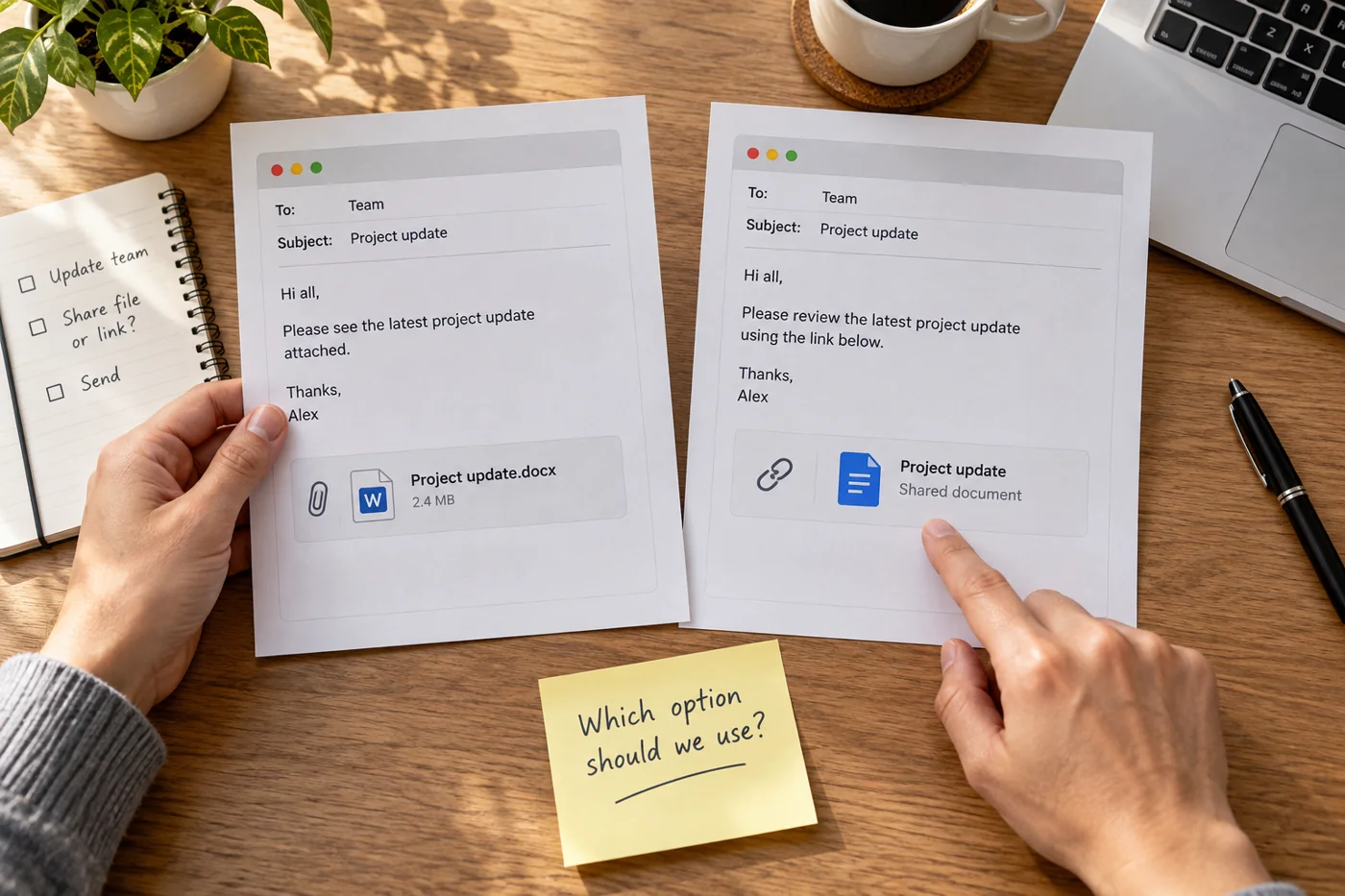
A clearly named attachment can suit a completed document when its size and the sending method are appropriate. The recipient then has a specific edition. Explain its date or status and what they should do with it. Avoid several files with almost identical names when only one is relevant to the request.
For joint editing, a link to the designated working file may fit better. State whether the recipient should read, comment or edit. A link does not communicate that intention by itself. Describe the action needed and when feedback is required, rather than expecting the recipient to infer the task from the filename.
Check access from the recipient's perspective
Inspect the sharing settings in the chosen service and select permissions appropriate to the actual recipient. Test access through an agreed method that does not simply reuse your own existing rights. A file you can open may still be unavailable to someone outside your organization.
Check the full address and avoid widening access unnecessarily merely because the first attempt fails. If an account is required, tell the recipient. When access fails, first establish which account they are using and what message appears. That information is more useful than repeatedly sending the same link with no change.
Consider later revisions
A link may continue pointing to a file after its content changes. If a specific edition must be identifiable, record that intended version clearly. Repeated attachments, meanwhile, create separate copies that can diverge. Agree which copy matters when someone raises a question later.
Before sending, check the recipient, filename or link destination and the explanatory sentence in the message. This prevents the right file being sent with inappropriate access, or the wrong edition being sent to the correct address. Choose according to the work people need to do together, rather than a blanket preference for attachments or links.