Update when the underlying need remains
Keep a page that still answers a distinct question. Change the information that has actually become outdated: steps, contacts, requirements or examples. A new date alone does not bring an obsolete procedure up to date. Open the tools or documents mentioned and check the described process where it forms part of the article.
Separate enduring explanation from details tied to a particular time. An article about preparing for training may remain useful after its old event date is removed. Record which statements were checked. That supports the next revision better than broadly labeling the whole page as new without explaining what changed.
Merge when two pages answer the same question
Compare the content before combining it. A brief overview and a detailed instruction may serve different purposes. Two almost identical guides with conflicting contact details are stronger candidates for a single version. Preserve relevant information from both instead of deleting one without reviewing it.
Decide which URL remains and where existing links should lead. Update navigation and cross-references to match the resulting content. A functioning redirect is not enough if its link text promises information the combined page no longer contains. Review the surrounding sentence as well as the address.
Remove with the old entry point in mind
For a discontinued service, a brief explanation of its closure may help more than an unexplained gap. An internal test page may have no public information value at all. Consider the individual case and do not imply a replacement offer exists when there is none.
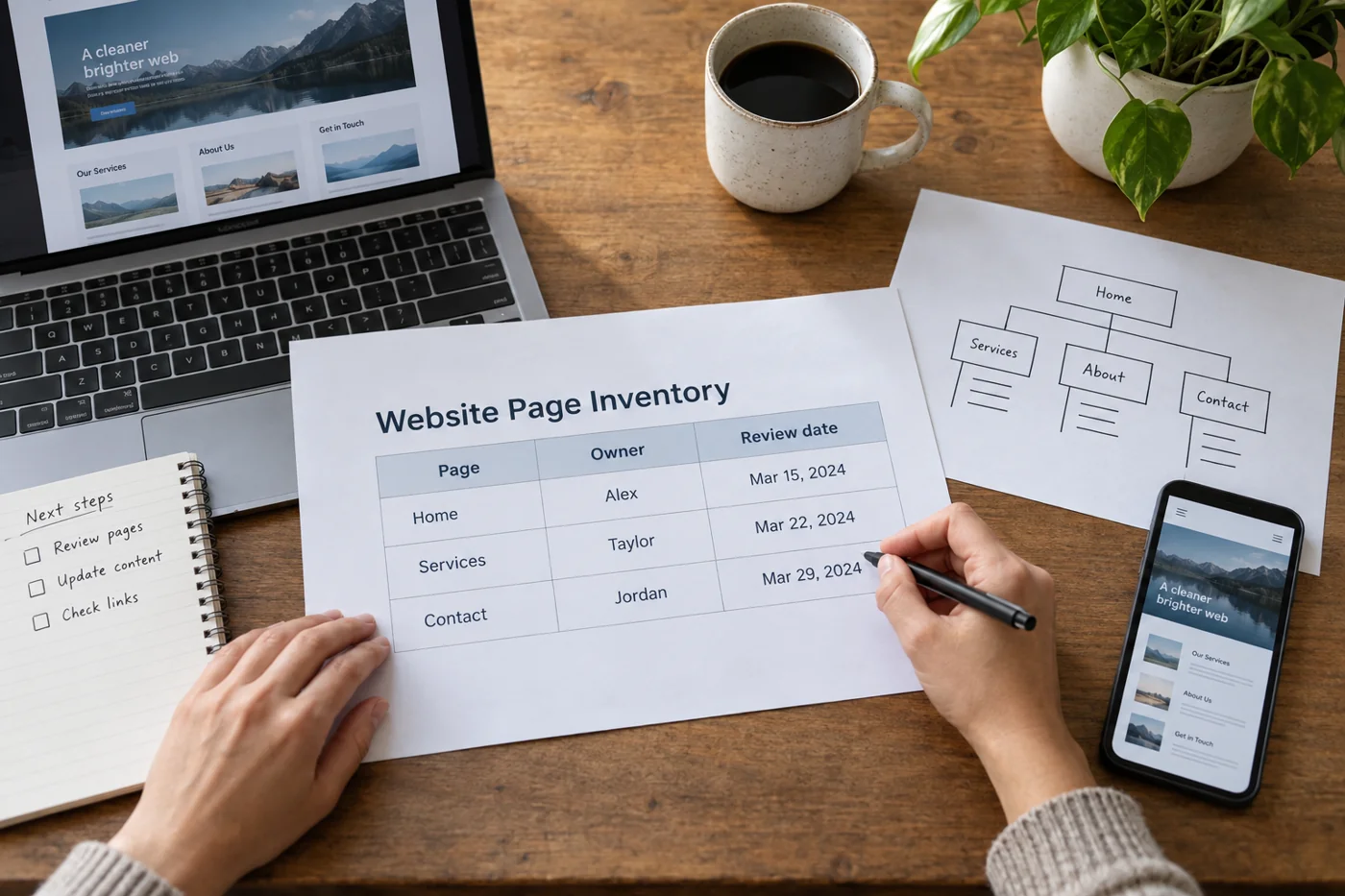
Record the old URL, chosen action and responsible person. Then check affected links and, on a bilingual site, the counterpart too. The clean-up is complete only when the remaining visitor journey matches the editorial decision. Keep the decision record somewhere the next editor can find it before recreating an intentionally retired page.