Describe the open position for each case
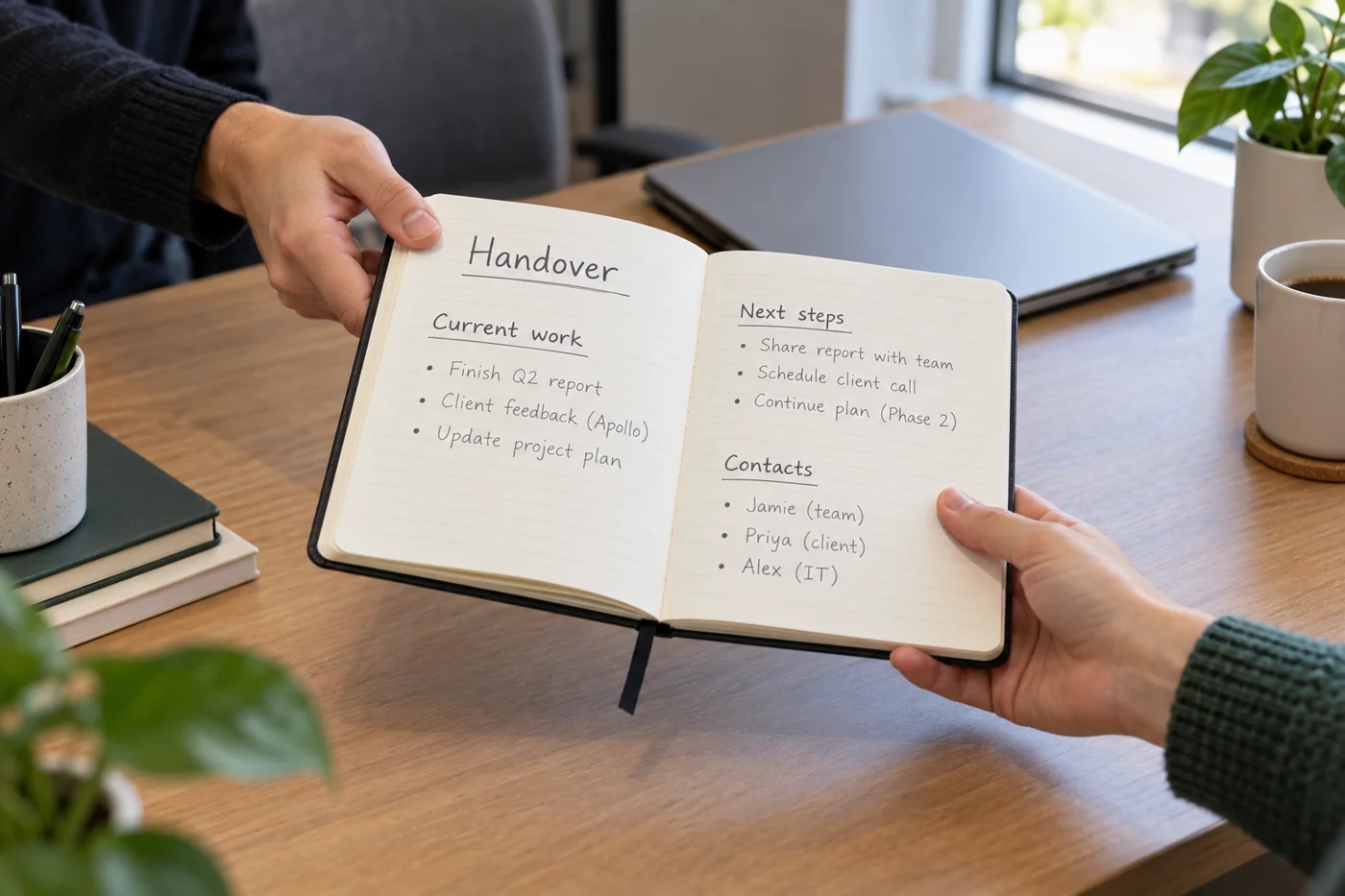
For each relevant case, record the last confirmed result and the next expected step. “Quotation ongoing” is too vague. A clearer account is that internal review is complete, a quantity figure is missing and the estimate can be updated afterwards. Link the appropriate working version and identify files that are not approved yet.
State what triggers the next action. Some tasks begin on a date; others follow a message or event. This distinction prevents the substitute from starting everything at once as a precaution. A brief dependency note can avoid several questions.
Explain decision boundaries
Clarify which decisions the substitute may make and when someone else must be involved. Refer to existing internal rules instead of inventing new approvals for the absence. A handover note must not imply authority that has not been agreed organisationally.
For unusual cases, identify an available contact and the context they need. A list of names without responsibilities is unhelpful. Explain who can supply missing technical information and who confirms a date change, for example. Limit contact details to what is necessary and the intended internal access.
Test access before leaving
Have the substitute open important links with their own account. Missing permissions then become visible while you can still respond. Do not share personal passwords as a shortcut. Use the organization's intended access or cover procedures and arrange necessary changes with the responsible team.
Check whether material exists only on your local device. A reference to a personal folder may be unusable to others. Move or copy required working material only to an appropriate location and identify the authoritative version. Two identically named copies without explanation increase uncertainty.
Run a short joint rehearsal
Choose a typical case and ask the substitute to explain their next action using the note. If several spoken additions are needed, they will probably be missing during your absence too. Add the decisive information rather than automatically expanding the entire history.
Finally, agree where developments during the absence will be recorded. A shared note or existing task area may suffice. On returning, read that position before pursuing old open items again. This closes the handover in both directions and prevents completed work from being accidentally restarted.
Test the handover against a real case
Before a longer absence, choose an active case and ask the covering colleague to explain the next action using your notes. For an internal event, a note might say: “Room confirmed; attendance still open; adjust seating after team responses.” This describes progress but does not identify who provides responses, where they are collected or which changes the colleague may make independently.
Add the missing information directly to that case. Identify the responsible team, the existing storage location and the agreed room capacity, for example. If attendance exceeds that capacity, the required decision should be clear. The covering colleague does not need the entire history; they need enough context to carry out the next step for a reason they understand.
Separate firm commitments from preferred timing. “Check on Tuesday if possible” is different from a promised response by Tuesday lunchtime. Where a date can move, explain who should agree the change. Where it is fixed, potential obstacles need to become visible early enough for someone to respond.
Plan the return as well
Agree how changes during the absence will be recorded. A short update within the case avoids creating a second, separate handover list. On return, review new decisions and outstanding questions first. Explicitly take responsibility back so that the covering colleague does not continue work in parallel while you have already restarted the same task. A brief closing conversation should focus on what changed, rather than repeat every item from the original handover.