Define comparison attributes
Choose attributes that identify the relevant entity. A name alone is often weak. An internal identifier may help if it was assigned reliably. Email addresses are not always unique either, particularly for shared mailboxes.
Separate identical-record detection from similar spelling. Capitalisation and spaces can affect comparison results. Normalise these forms only in a traceable comparison view while preserving original values.
Create candidates, not automatic deletions
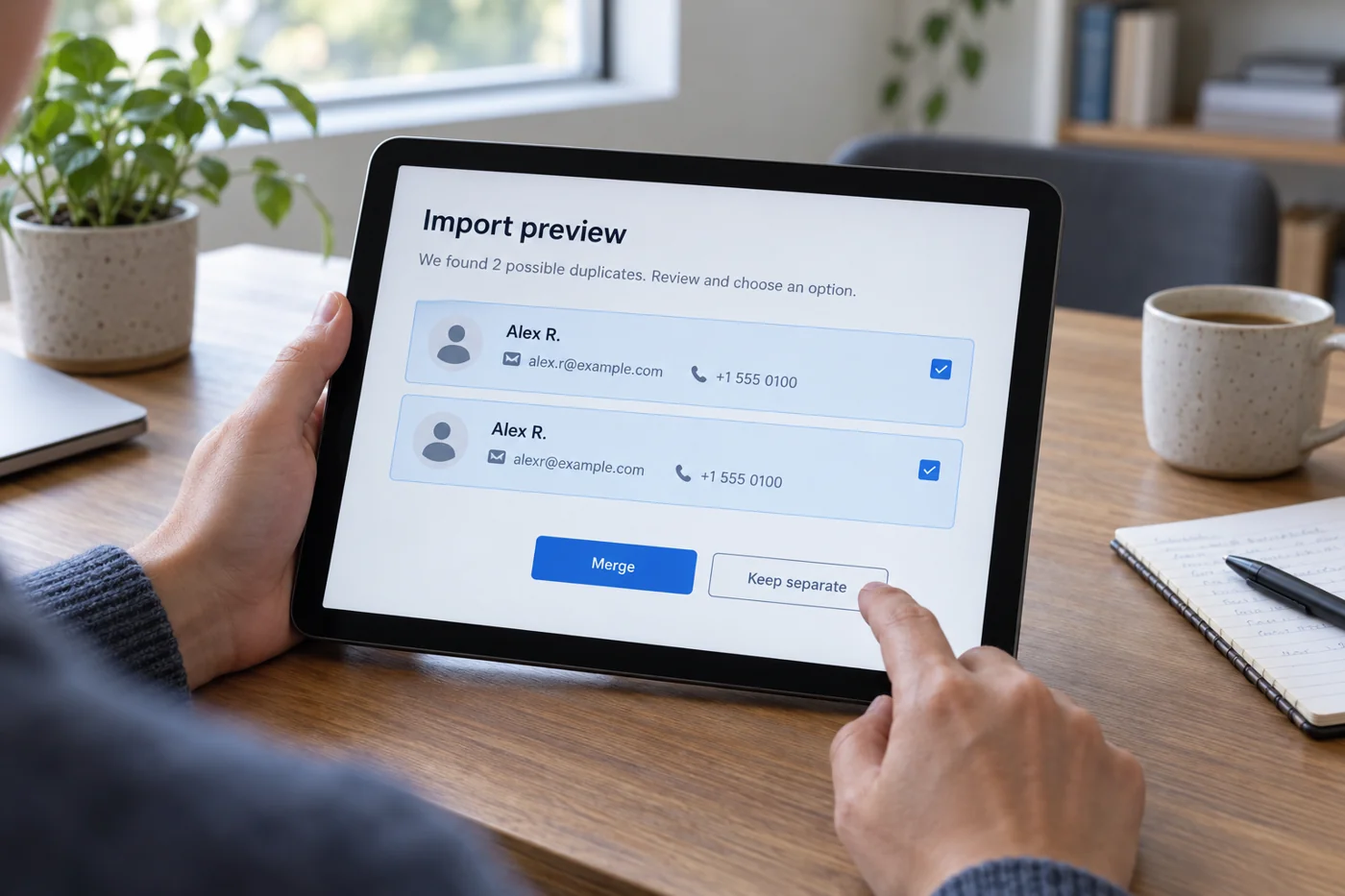
First group possible duplicates. Within each group, examine which details agree and which differ. One record may have the newer address while another holds the important case reference.
Decide whether to merge, retain separately or investigate further. A merge needs a rule for which value survives and how related tasks or attachments remain connected. Simply removing a row may break those relationships.
Review decisions separately from import
Keep a short record of reviewed groups, decisions and owners so later questions can be answered. For a large dataset, another person can check disputed cases before the cleaned version is approved.
Import a small subset into a test area first. Check whether the destination updates records through existing identifiers or creates new entries. A cleaned source file cannot prevent new duplicates when the same import is accidentally added twice.
Keep the original export distinguishable from the cleaned import version. Record the change in record count and explain substantial differences. The number alone does not establish quality, but it helps reveal accidental losses or additional entries.
Keep both entries in a disputed pair until the uncertainty is resolved. A strong resemblance is a reason to investigate, not sufficient justification for an irreversible merge. Assign the unresolved pair to somebody who can check the underlying business context.