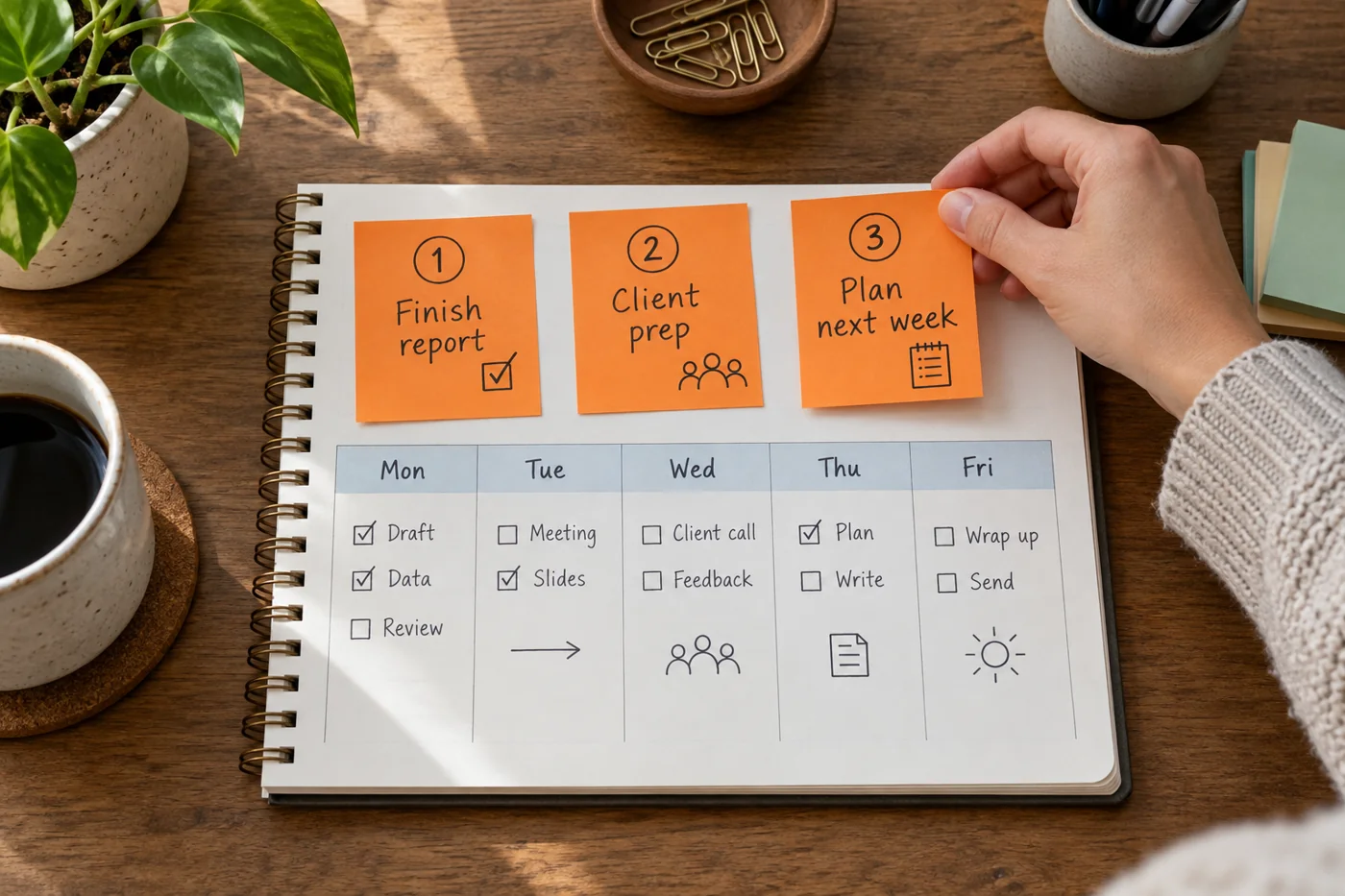
Define the end state clearly
Establish what must exist by the deadline: a reviewable draft, an internally approved document or a file already delivered. These are different states. If the date concerns an initial review, do not accidentally plan a final publication. Conversely, required approval cannot begin only after delivery is due.
Record the format, recipient and handover route where known. A finished text may still be undeliverable if attachments are missing or the recipient cannot access the file. Include those final steps explicitly.
Work back from the last necessary step
Ask what must be complete immediately before delivery, then identify that step's prerequisite. For an internal report, the sequence might be delivery, approval, technical review, draft and collection of source data. This describes dependencies, not yet precise durations.
Distinguish working time from waiting time. Review may require only an hour of effort but happen two days later because the reviewer has other commitments. Confirm availability before treating the plan as agreed.
Put uncertainty in the right place
Not every step is equally uncertain. A familiar format check differs from combining inconsistent data for the first time. Allow additional clarification where prerequisites are genuinely open. A general reserve at the end helps little when a necessary response was requested too late.
When effort is unclear, agree an early checkpoint. A small data sample might first establish whether the sources fit together. This gives a better basis for the remaining plan and prevents a fundamental problem appearing only shortly before delivery.
Compare the calculated start with reality
If the required start is already in the past, the current plan is not feasible. That is useful information, not a reason to remove early steps from the display. Discuss scope, support or the deadline with the responsible people. An impossible plan does not become realistic through neat formatting.
Check competing calendar commitments too. Several projects may need the same person's approval at the same time. Backwards-calculated dates must therefore be compared with available capacity before they become a dependable agreement.
Carry changes through the dependencies
When an early step finishes later, identify the affected following steps. Not every delay automatically changes the final date, but it requires a specific decision. Some work may run in parallel or part of the scope may be removed. Record who confirms that change.
After completion, compare the plan with what happened. Which waiting time was underestimated, which review happened twice unnecessarily and where was a prerequisite missing? These findings improve the next plan more than simply noting that the deadline was barely met.
Allow for waiting and change
Suppose a document is due at noon on Friday. A substantive review needs one working day, incorporating comments takes half a day, and final delivery needs a further short step. That does not automatically mean a draft on Thursday morning is sufficient: the reviewer must actually be available then. Plan around confirmed windows rather than arithmetic duration alone.
Consider which activities can run in parallel. Two chapters may be written simultaneously once their foundations are settled. A combined total, however, cannot be checked before the necessary figures arrive. Mark those dependencies explicitly. Otherwise, a plan can look fast on paper while people repeatedly wait for one another in practice.
Set a decision point for uncertain inputs. If important information is still missing on Tuesday, the team might reduce scope, agree a clearly labeled assumption or renegotiate delivery. The accountable person must decide which option is acceptable. Silently shortening the review is not an equivalent response to the delay.
When the deadline changes later, do not move every intermediate date by the same number of days without checking. Revisit availability, dependencies and work already completed. An earlier review may remain useful even when final delivery moves back. The backwards plan is a working basis that must respond to actual changes, including a reviewer becoming unavailable or an additional check being required after the initial schedule was agreed.