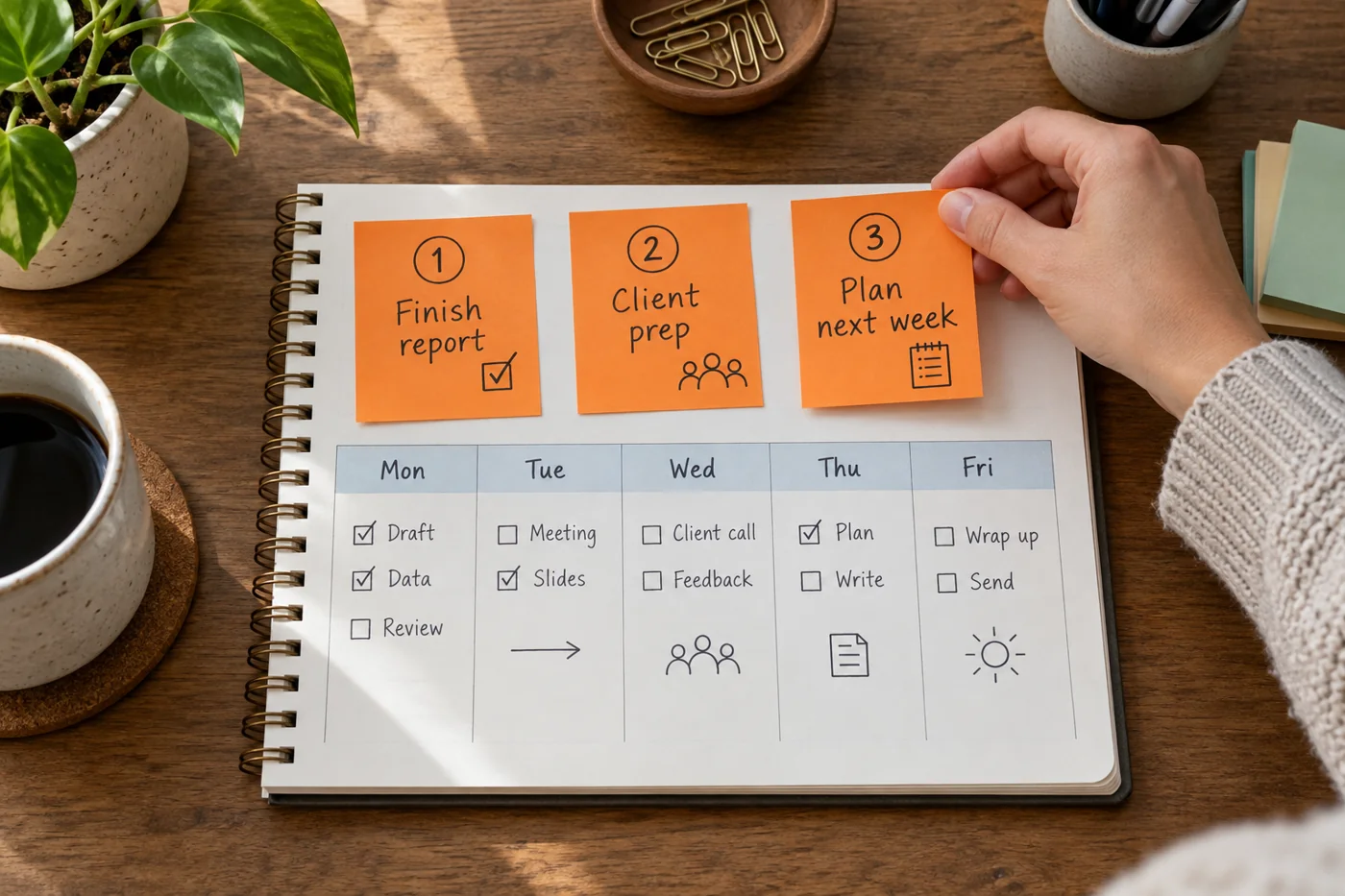
Prepare tomorrow's starting point
Write the next step as an action rather than a broad topic. “Continue analysis” requires fresh thinking in the morning. “Compare the three marked rows with the source file” provides a concrete start. Refer to the current working version so you need not search several files first.
Capture an important consideration that might otherwise disappear. This could explain why a figure was not accepted yet or which alternative you intended to examine. Preserve only what makes restarting easier, not every thought.
Separate commitments from ideas
Check whether a promised brief response remains outstanding. If it cannot happen today, inform the affected person according to the agreed working practice. A private note does not replace necessary communication with others.
Collect new ideas separately without immediately making them commitments for tomorrow. Otherwise, every daily close creates another task list. Decide during the next planning session which ideas deserve further work.
Leave a clear working state
Save the intended version and follow internal rules for devices and documents. With shared files, check that others can reach the version they need. A locally saved intermediate file may be unusable to the next colleague.
Read the note next morning before new messages determine your order. Still check whether an important prerequisite changed overnight. The note is a starting point rather than an inflexible instruction. If it regularly becomes very long, restrict it to the working position, next action and open dependency. Its value lies in reducing the effort of restarting, not in producing a second daily report nobody reads.
For an interrupted task, one precise sentence may be enough: “Section two checked; tomorrow first compare the three outstanding figures with the approved table.” This is more useful than a general reminder to continue the document. It preserves the entry point while it is still fresh and reduces the effort of restarting.